Build one connector. Run it everywhere.
A secure MCP runtime, source synchronization contract, and governed write-back boundary for the agent ecosystem.
Serve
Create FastMCP servers with authentication, safe exposure, visibility, health, rate limits, and a consistent tool surface.
Synchronize
Discover certified source contracts, extract bounded pages, and advance EG-authoritative checkpoints from durable receipts.
Publish
Expose skills, prompts, ontologies, SHACL shapes, and manifests as deterministic ConnectorPack content.
Write back
Preview exact diffs, verify policy and source versions, apply idempotently, and reconcile uncertain effects.
Ingest repositories
Page authenticated immutable snapshots into deterministic manifests and bounded IndexRepository requests with typed per-file outcomes and tombstones.
One graph contract
The SDK depends directly on epistemic-graph>=2.27. Generated SourceIngest,
ConnectorPack, and WriteBack models and clients are the sole graph boundary.
Connector packages keep vendor logic local; durable identity, mapping,
checkpoints, provenance, and receipts stay authoritative in epistemic-graph.
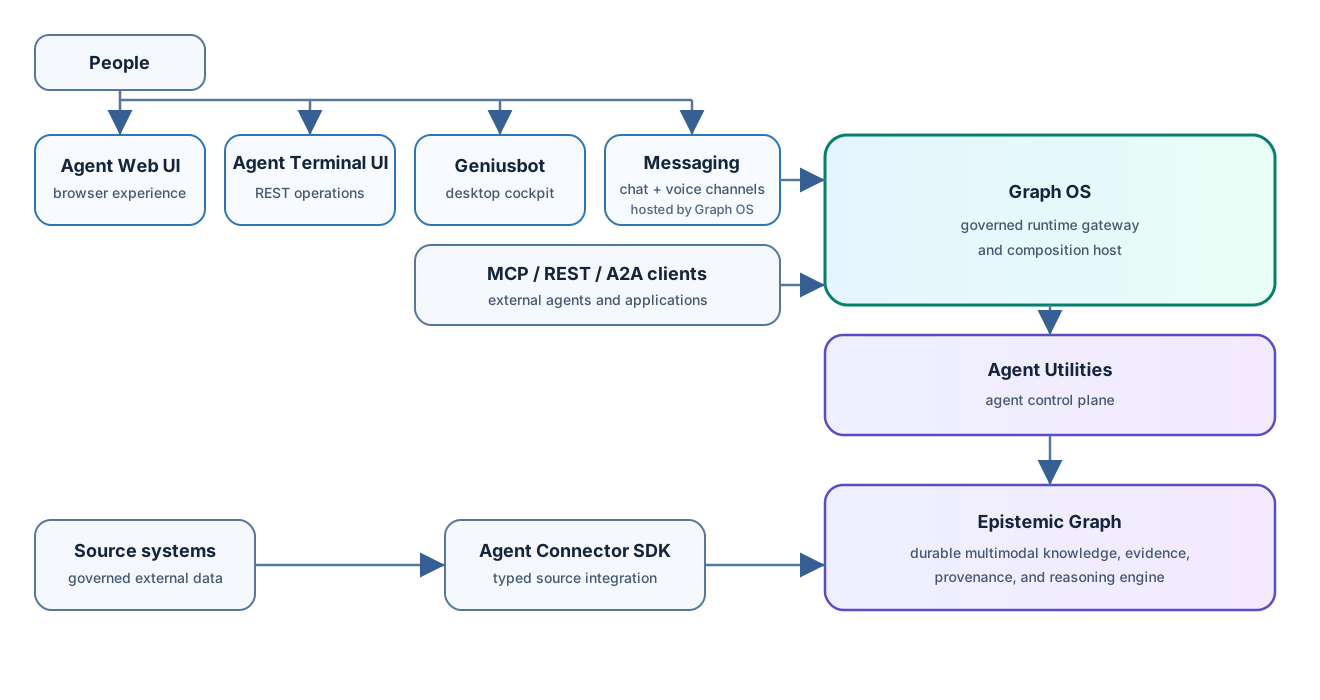
From API to durable evidence
-
DescribeA connector publishes its tools, content, source presets, and safety declarations over MCP.
-
CertifyThe SDK verifies package identity, live schemas, pagination, and extension behavior.
-
TransportBounded pages and exact content archives cross generated epistemic-graph contracts.
-
Acknowledgeepistemic-graph commits state and returns the receipt that authorizes the next step.
Choose a path
- New connector: follow Build your first connector.
- Runtime owner: read Architecture and Connector sync.
- Repository operator: use Repository ingestion for immutable snapshot paging and durable indexing receipts.
- Extension author: implement Extension ports and run the Conformance kit.
- Security reviewer: start with Connector servers, HTTP clients, and Credentials.